Mixed Metal Jewellery: How to Wear Gold and Silver Together

Mixed Metal Jewellery
Gold and Silver, Finally Together
The old rule said pick one metal and stay loyal. The new rule is that mixing metals is the fastest way to make a stack look deliberate. Here is how to do it properly.
Want the shortcut? The two-tone mixed metal trio necklace does the mixing for you.
Why the One-Metal Rule Died
For decades the advice was simple: match your metals to your watch and never cross the streams. Then real wardrobes won.
The one-metal rule assumed you owned one good set of jewellery and wore it with everything. Modern stacks are built over years: a gold hoop from one birthday, a silver ring from another, pieces with sentimental value that never coordinated in the first place. Mixing metals is not a trend so much as an honest reflection of how jewellery is actually collected.
Stylists came around for a practical reason too: mixed metals read as intentional. A wrist of matching gold can look like a set you bought in one go. Gold against silver, done with a little structure, looks curated. The structure is what this guide is about.

Start With an Anchor Piece
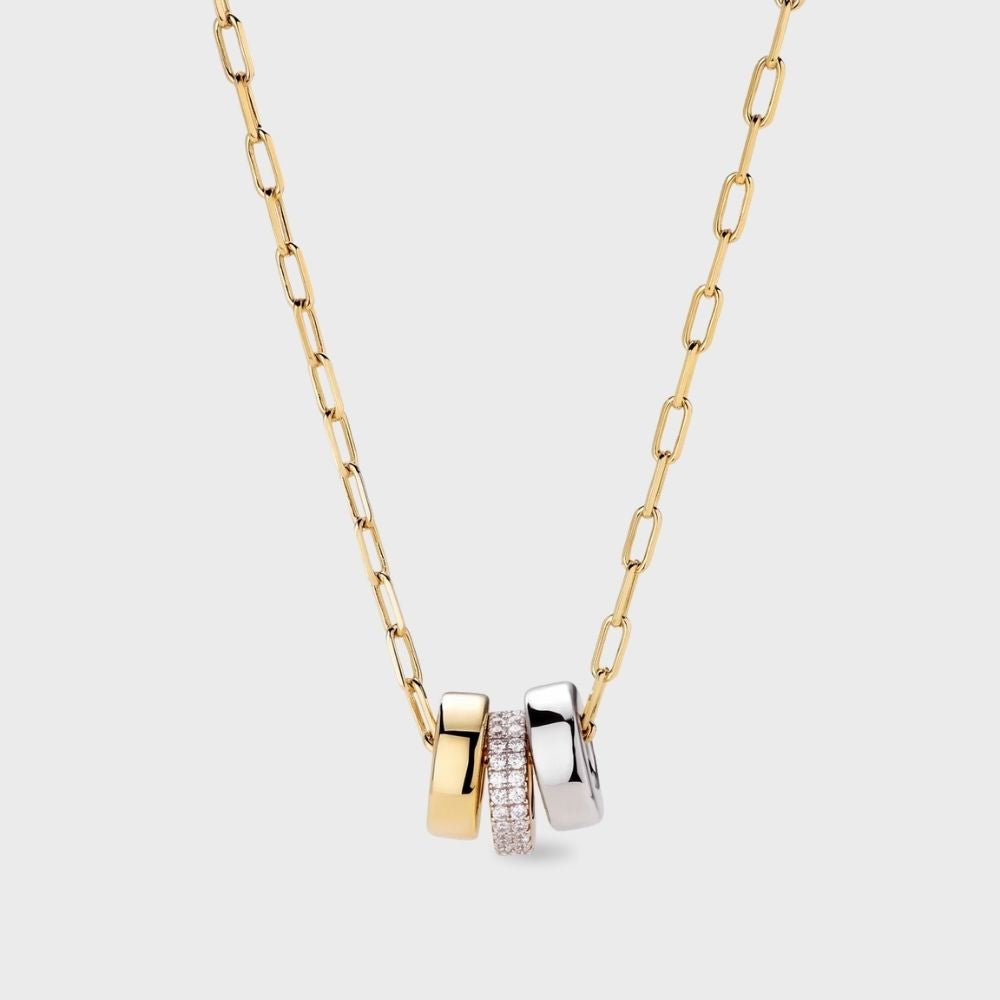
The easiest mixed-metal look starts with a single piece that already contains both metals. It acts as a translator: once gold and silver sit together at your neckline, every other piece you add on either side looks planned. This is exactly what the Mixed Metal Trio Necklace was designed to do, with a polished gold ring, a pavé ring and a polished silver ring sliding on one paperclip chain.
The 70/30 Ratio That Always Works
Half-and-half mixing looks indecisive. A dominant metal with an accent metal looks styled. Aim for roughly 70/30.
Pick your lead metal based on what you already own most of, then let the second metal appear two or three times as an accent: one ring, one chain, one earring in a stack. The eye reads the minority metal as a deliberate highlight rather than a mismatch.
Distance helps too. Gold necklace with silver rings is an easier win than gold and silver bangles stacked on the same wrist. When the metals do share a wrist or a neckline, repeat each metal at least once so it looks like a pattern, not an accident. Our necklace layering guide covers the chain lengths that keep a two-metal neckline readable.
Pieces That Do the Mixing For You
Some designs are born two-tone, and they are the lowest-effort way into this look.
Two-tone rings carry the logic on one finger: bands that interlock gold and silver, or pavé settings where the stones bridge the two finishes. The ring collection includes multi-band designs built exactly on this idea.
At the neckline, a two-tone pendant on a single-metal chain gives you the 70/30 ratio automatically. And in the ears, one gold hoop and one silver stud in a curated stack is the micro version of the same trick.
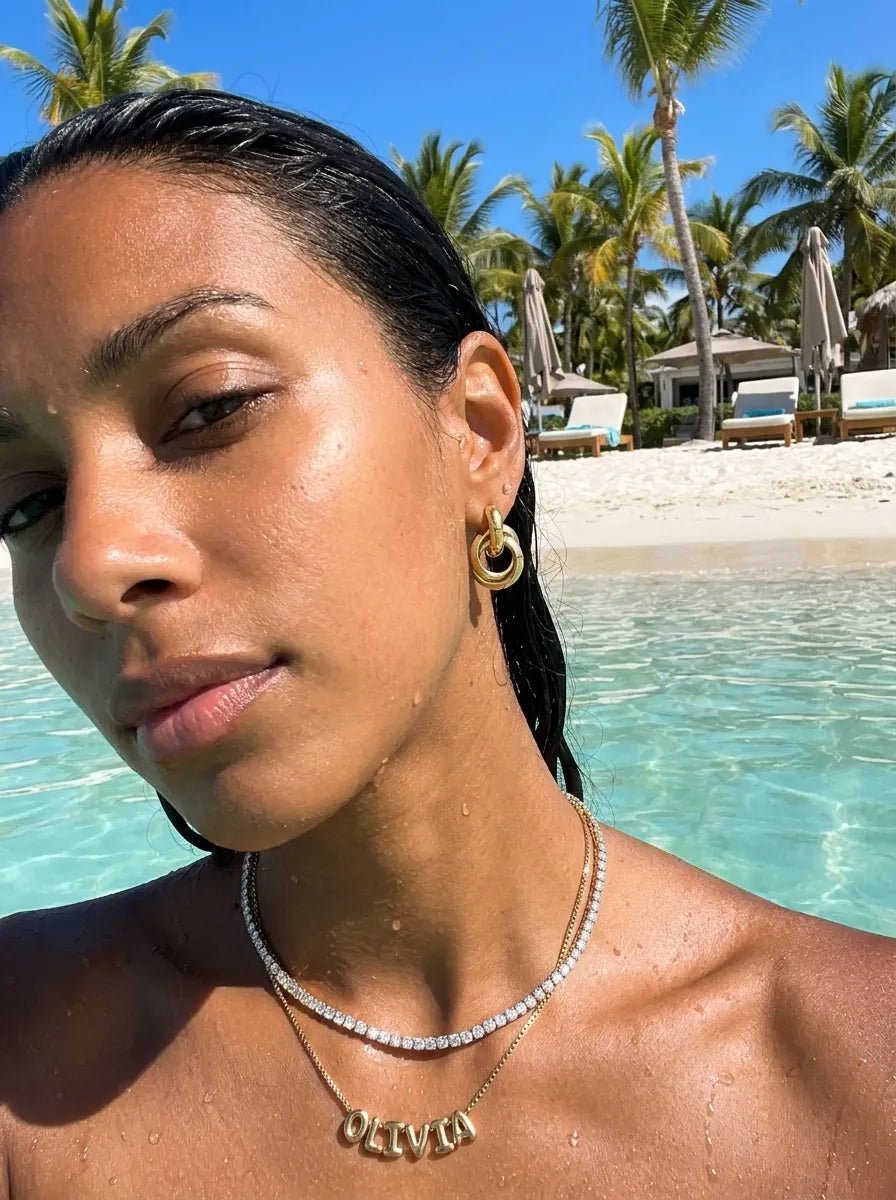
Because every Moonela piece is 316L stainless steel with 18k gold or silver plating, both finishes are waterproof and tarnish-free. Mixing metals only works when both metals keep their colour: a gold piece next to a tarnished silver one stops being a style choice.

Mixed Metals and Your Skin Tone
The classic advice pairs warm undertones with gold and cool undertones with silver. Mixing sidesteps the question entirely.
A two-tone piece flatters every undertone because the metal your skin loves is always present. That makes mixed-metal jewellery one of the safest gifts you can buy: you are not gambling on whether she is a gold person or a silver person. If you are choosing a present, the gifting without knowing her style guide leans on exactly this logic.
Two Finishes, One Routine
Mixed metals only stay elegant if both metals age at the same speed. Material choice does most of that work for you.
Traditional sterling silver tarnishes faster than gold plating wears, which is why vintage mixed stacks often look lopsided. Stainless steel with PVD plating removes the problem: both the gold and silver finishes handle showers, gym sessions and daily wear without dulling. A soft cloth wipe now and then is the entire routine. The waterproof jewellery care guide has the full detail.
Mixing Metals at the Wrist and Ears
The neckline is the easiest place to mix metals. The wrist is where the look gets its personality.
A mixed wrist works on the same 70/30 logic, with one refinement: texture separation. A smooth gold bangle against a silver chain-link bracelet reads instantly as intentional, because the eye separates the pieces by surface before it separates them by colour. Two chains of identical link style in different metals is the harder trick, save it for when the rest of the wrist is quiet.
Watches deserve their own mention because most people already own the anchor and do not realise it. A two-tone watch is a licence to wear anything; a single-metal watch simply becomes your 70. Build outward from it: watch metal twice more on that arm, accent metal once. The waterproof bracelet collection covers both finishes so the pairing ages evenly.
In the ears, mixing is at its most forgiving because distance between pieces is built in. A curated ear with one gold hoop, one silver stud and one pavé piece reads as expensive styling, not indecision. If you wear multiple piercings, alternate rather than block: gold-silver-gold climbs better than gold-gold-silver.
Mixed Metals From Office to Evening
One of the quiet advantages of a mixed-metal foundation is that it dresses up and down without a jewellery change.
For work, the trio necklace alone over a knit or shirt is complete: polished, a little interesting, zero effort. The mixed finish means it coordinates with whatever watch, laptop, ring situation the day involves. For evening, add one more piece in each metal, a gold tennis bracelet, a silver ring, and the same necklace becomes the centre of a deliberate composition rather than a solo act.
Weddings and formal events used to be the last stronghold of the one-metal rule, and even that has fallen. A mixed-metal neckline against a neutral dress photographs beautifully because it catches two temperatures of light. If the dress itself has metallic details, match your dominant metal to the dress hardware and let the accent metal do the talking. Our wedding guest jewellery guide covers the full etiquette.
Holidays are where waterproof mixed metals earn their keep: one necklace that works at the beach, at dinner and in the sea, with no metal-matching luggage decisions. Pack the trio, a pair of gold hoops and one silver ring and the week is styled.
How Mixed Metals Went From Faux Pas to Signature
Fashion history explains why the rule existed and why it broke.
The one-metal rule dates from an era when jewellery was bought in sets and worn as sets, matching was proof of means. Mass fashion jewellery inverted the economics: everyone could match, so matching stopped signalling anything. What signals taste now is composition, evidence that a human with opinions assembled the look. Mixed metals are simply the most visible form of composition.
The 2020s accelerated it from runway to default. Jewellery went from accessorising outfits to being worn 24/7, thanks partly to waterproof construction, and a permanent stack accumulates history: gifts, travels, phases. Curating across metals became normal because life does not arrive in one finish. Trend forecasters have called two-tone the defining jewellery direction of the decade, but the deeper truth is that it is not really a trend, trends end. It is a permission, and permissions stick. The tennis jewellery trend piece tracks how the same logic reshaped stone-set pieces.
Where Mixed Metal Sits in a Capsule Collection
If you build your jewellery like a capsule wardrobe, a two-tone anchor is not an extra. It is load-bearing.
A five-piece capsule normally splits by function: personal piece, plain chain, stone piece, texture piece, long layer. The quiet flaw in that formula is metal lock-in, build it all in yellow gold and every future silver gift sits awkwardly outside the system. One two-tone piece in the five dissolves the lock: suddenly the capsule accepts both metals natively, and every inherited ring, gifted bracelet and impulse silver purchase has a bridge into your daily rotation.
That is the strategic case for making the two-tone piece one of your first purchases rather than a later exotic addition. It future-proofs the collection at the exact moment the collection is cheapest to steer. The full method is in the capsule wardrobe guide, and the trio necklace was designed, quite literally, to be that bridge piece.
The same logic scales down to travel capsules: three pieces for a week away should always include the two-tone anchor, because it is the one piece guaranteed to match whatever the other two turn out to be.
Anatomy of the Trio: Why Each Ring Earns Its Place
Good two-tone design is engineered, not just plated in two colours. The trio's three rings each do a specific visual job.
The polished gold ring is the warmth: it ties the piece to gold earrings, gold watches and warm skin undertones. The polished silver ring is the cool counterweight, the licence that lets silver rings and white-metal watches into the outfit. The pavé ring is the diplomat: its white stones read with both metals simultaneously, so wherever your eye lands first, the composition already agrees with it. Remove any one ring and the piece becomes either single-metal or indecisive; the trio is the minimum viable mix.
The paperclip chain matters as much as the rings. Its elongated links give the pendants a track to slide on, so the arrangement shifts subtly as you move, catching light on different faces through the day. And because chain and rings alike are 316L steel under PVD, gold and silver finishes age at the same rate, the failure mode of vintage two-tone pieces, one metal dulling first, is engineered out. Materials details are on the product page, and the finish logic is unpacked in our PVD guide.
Buying a Two-Tone Piece: Five Checks Before Checkout
Two-tone jewellery has one failure mode of its own, and four shared with everything else. Five checks cover all of them.
Matched ageing: the two-tone-specific check. Both finishes must be the same construction, steel under PVD in gold AND silver, or the pairing drifts apart as one finish dulls first. A gold-PVD ring next to a plated-silver one is a countdown, not a composition. Named base metal, 316L or nothing, exactly as with single-metal pieces. Finish process named: PVD for the wear-it-everywhere contract. Proportions in centimetres: two-tone pendants live or die by scale against your other pieces, so check dimensions, not photos. Guarantee parity: lifetime cover should apply to both finishes identically, and at serious brands it does.
Pass all five and a two-tone piece is the single hardest-working object in a jewellery box: the piece that makes everything else pair. Fail the first and you own two half-necklaces on one chain. The materials background for every check is in our everyday metals guide.
Frequently Asked Questions
Is it OK to wear gold and silver jewellery together?
Yes. The one-metal rule is long gone. Mixed metals look deliberate when you keep a dominant metal and use the second as an accent, roughly a 70/30 split.
What is the easiest way to start mixing metals?
Start with one piece that contains both metals, like a two-tone necklace or ring. It anchors the look and makes every other piece read as intentional.
Do mixed metal pieces tarnish unevenly?
Traditional silver tarnishes faster than gold, which unbalances a mix over time. Stainless steel with PVD plating in both finishes ages evenly, so the pairing stays crisp.
Can I mix metals with a watch?
Yes. Treat the watch as your dominant metal and echo the second metal once or twice elsewhere. Two-tone watches pair with everything by the same logic.
Does mixed metal jewellery suit every skin tone?
Yes, and that is its quiet superpower. Whichever undertone you have, one of the two metals is always working for you, which also makes two-tone pieces a safe gift.
Can I wear rose gold with silver and yellow gold?
Yes, three-metal mixing works when one metal clearly dominates and the other two appear once or twice each. Rose gold sits naturally between the temperature of silver and yellow gold, which makes it a good bridge.
Should my necklace metals match my earrings?
Not necessarily. Matching within a zone matters more than matching across zones: a coherent ear and a coherent neckline can differ from each other and still read as styled.
Is two-tone jewellery in style for 2026?
Yes, and more importantly it has moved from trend to staple. Two-tone anchor pieces are now recommended as collection foundations precisely because they will not date.
What length should a two-tone necklace be?
The trio wears best at 40 to 45 cm, high enough that the rings sit above most necklines and stay visible. All three stocked lengths include a 5 cm extender for fine-tuning.
Can the rings on the trio necklace be removed?
They slide on the chain and are held by the clasp circuit, like charms on a collar. Worn normally they stay put; the sliding is what animates the piece as you move.
Start With the Trio
Three sliding rings, gold, pavé and silver, on one paperclip chain. The anchor piece that makes the rest of your jewellery box work together.
Shop the Trio NecklacePrefer to browse? The full necklace collection has every chain and finish.